Showing posts with label biology. Show all posts

Tuesday, April 14, 2020

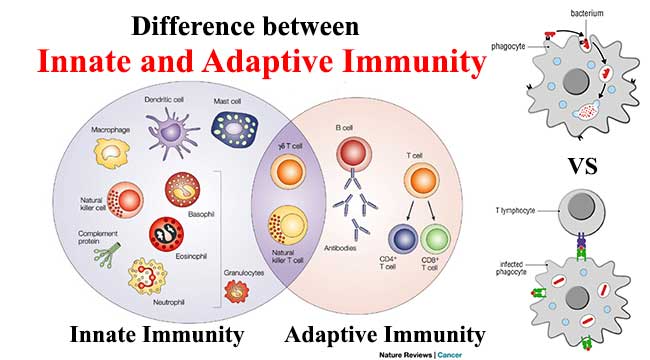
Innate vs. Adaptive Immunity


No.

Characteristics

Innate Immunity

Adaptive immunity

1.PresenceInnate immunity is something already present in the body.Adaptive immunity is created in response to exposure to a foreign substance.
2.SpecificityNon-SpecificSpecific
3.ResponseFights any foreign invaderFight only specific infection
4.ResponseRapidSlow (1-2 weeks)
5.PotencyLimited and Lower potencyHigh potency
6.Time spanOnce activated against a specific type of antigen, the immunity remains throughout the life.The span of developed immunity can be lifelong or short.
7.InheritanceInnate type of immunity is generally inherited from parents and passed to offspring.Adaptive immunity is not passed from the parents to offspring, hence it cannot be inherited.
8.MemoryCannot react with equal potency upon repeated exposure to the same pathogen.Adaptive system can remember the specific pathogens which have encountered before.
9.PresencePresent at birthDevelops during a person’s lifetime and can be short-lived.
10.Allergic ReactionNoneImmediate and Delay hypersensitivity
11.Used AgainstFor microbesMicrobes and non-microbial substances called antigens
12.MemoryNo memoryLong term memory
13.DiversityLimitedHigh
14.SpeedFaster responseSlower response
15.Complement system activationAlternative and lectin pathwaysClassical pathway
16.Anatomic and physiological barriersSkin, Mucous membranes, Temp, pH, chemicals, etc.Lymph nodes, spleen, mucosal associated lymphoid tissue.
17.CompositionThe innate immune system is composed of physical and chemical barriers, phagocytic leukocytes, dendritic cells, natural killer cells, and plasma proteins.Adaptive immune system is composed of B cells and T cells.
18.DevelopmentEvolutionary, older and is found in both vertebrates and invertebrates.Adaptive immunity system has been developed recently and is found only in the vertebrates.
19.ExampleWhite blood cells fighting bacteria, causing redness and swelling, when you have a cut.Chickenpox vaccination so that we don’t get chickenpox because adaptive immunity system has remembered the foreign body.
Ref: https://microbiologyinfo.com/difference-between-innate-and-adaptive-immunity/

Friday, June 15, 2018

About snRNAs and snoRNAs

Some quick survey about snRNAs and snoRNAs:

- snRNA

small nuclear RNAs, ~150nt,  also called uRNA (due to rich of uridylic residues), functions in RNA splicing
There are 1916 snRNAs in the human genome. Their length distribution as below:
 20  1
 40 * 20
 60 ********** 209
 80 ****** 129
100 ************************************************************ 1217
120 ***** 95
140 **** 83
160 ****** 116
180 ** 42
200  3
220  1


- snoRNAs

small nucleolar RNAs, functions in guiding the modification of other ncRNAs, e,g. mainly rRNAs, snRNAs, tRNA. 
snoRNAs form cluster and 
In human genome (GENCODE v19), there are 1457 snoRNA genes. Length distribution as below:
 40 * 9
 60 *********************************** 252
 80 *************************************** 275
100 ************************************************************ 426
120 ************************************************ 342
140 ******** 59
160 ** 11
180 *** 18
200 ******** 56
220  3
240  1
260 * 4
280  0
300  0
320  1

Some of them have many copies and cluster in a imprinting gene locus (http://www.geneimprint.com/site/genes-by-species), e.g.  SNORD113 and SNORD114 are clustered and located in intron of MEG8, a long ncRNA only maternally expressed. 
And the number of snoRNA copies in the cluster is associated with diseases. e.g. Loss of the 29 copies of SNORD116 (HBII-85) from this region has been identified as a cause of Prader-Willi syndrome whereas gain of additional copies of SNORD115 has been linked to autism.

Monday, May 15, 2017

Kingdoms and domains of life

Notes of revisiting the topic:

  1. Linnaeus originally placed all living things into either plant or animal kingdom, and nowaday we place living things (e.g. not virus) into six (Animalia 动物界, Plantae 植物界, Fungi 真菌界, Protista 原生生物界, Archaea/Archaeabacteria 古细菌界, and Bacteria/Eubacteria 细菌界in US's textbook) or five (Animalia, Plantae, Fungi, Protista and Monera in other countries) kingdoms.
  2. Protista is any eukaryotic organism that is not an animal, plant, or fungi. 原生生物是除动物植物真菌之外的一切真核生物,包括海带、紫菜、藻类、变形虫等。所以海带不是植物,长知识了!
  3. Archaea/Archaeabacteria 古细菌界 vs. Bacteria/Eubacteria 细菌界: Archaea (/ar-kee-ə/, ending sounds like IKEA) and Bacteria are both prokaryotes. Archaea is similar to Bacteria in structure (e.g. No membrane-bound organelles or nucleus, circular chromosome), but is closer to eukaryote in biochemistry (e.g. similar transcription and translation to Eukarya, e.g. TFs bound to the promoter, RNA pol II). Archaea was originally found in the extreme environment, e.g. extreme hot spring in Yellowstone, but now it's found everywhere in the world, e.g. in the gut of a human. 
  4. Not all extremophiles are Archaeons. Thermus aquaticus, originally found in Yellowstone National Park, is not an Archaea, but a thermophilic Bacteria. The famous Taq enzyme for PCR is from the bacteria. T. aquaticus 最初是由Thomas Brock在1969年发现的,1976年DNA聚合酶polymerase 首次从T. aquaticus中分离出来,1988年Kary Mullis等发现并提纯了这个酶,指出其可用于PCR,5年后(1993)因此获得诺贝尔化学奖。
  5. Six kingdoms are grouped into three domains (Bacteria, Archaea, and Eukarya), although both Bacteria and Archaea are Prokarya (原核,无核膜). The main characteristics that scientists focus on when determining which kingdom an organism belongs to are summarized below:
       • Cell Type: Organisms are either prokaryotic or eukaryotic (有无核膜).
       • Cell Walls: Some organisms have cell walls and others do not (有无细胞壁).
       • Body Type: Organisms can be unicellular or multicellular (单细胞 or 多细胞).
       • Nutrition: Many organisms are autotrophs and others are heterotrophs, respectively depending on whether they make their own food or receive nutrients by consuming other organisms (自养 or 它养.

Wednesday, November 09, 2016

IBS vs. IBD

Regarding the question what's IBD and IBS, here is my understanding:

A SNP (or a segment of DNA) is identical by state (IBS) if they have the same alleles in two of more individuals. For example, if person A has genotype A/C at a SNP position while person B has A/T at the position, then that SNP position has a IBS=1 status. IBD is a IBS that their shared alleles are from a common ancestor. That is, in my above example, if A and B’s parents have genotype A/C(mom) and A/T (dad), then we don’t know if the shared “A” allele in A and B came from mom or dad. In that case, it’s just an IBS, not an IBD. But if their parents’ genotypes are A/G (mom) and C/T (dad), then we know for largely sure the “A” is from mom, not from dad. So, it’s both an IBD and IBS. In practice, for a pair of individuals, without knowing their parents, we could estimate their IBD likelihood for each SNP using their IBS information. I think the math behind is Bayesian theorem. 

PLINK use IBS-based clustering to remove sample outliers (which have too-far IBS distance from the rest), see here: http://pngu.mgh.harvard.edu/~purcell/plink/strat.shtml
PLINK use IBD to detect samples too-close to each other (e.g. relatives, contamination). See here: http://pngu.mgh.harvard.edu/~purcell/plink/ibdibs.shtml

Below is a nice piece for how to use IBD to detect relative. From Anderson, C. et al. Data quality control in genetic case-control association studies. Nat Protoc. 5, 1564–1573 (2010).
The expectation is that IBD = 1 for duplicates or monozygotic twins, IBD = 0.5 for first-degree relatives, IBD = 0.25 for second-degree relatives and IBD = 0.125 for third- degree relatives. Owing to genotyping error, LD and population structure, there is often some variation around these theoretical values and it is typical to remove one individual from each pair with an IBD value of > 0.1875, which is halfway between the expected IBD for third- and second-degree relatives. For these reasons an IBD value of > 0.98 identifies duplicates.

Another review on this is also worthy reading: Joseph E. Powell, Peter M. Visscher & Michael E. Goddard. Reconciling the analysis of IBD and IBS in complex trait studies. Nature Reviews Genetics 11, 800-805 (2010)


The following slide (from http://ibgwww.colorado.edu/workshop2005/cdrom/ScriptsA/evans/IBDestimation/IBD--2005.pdf) could be easier to understand IBD vs. IBS:

Wednesday, December 09, 2015

Dopamine is the "Kim Kardashian of molecule" in brain -- I like this!


The main dopaminergic pathways of the human brain. (Wikipedia)

, and it's interesting to know the impressive people in the Kardashian family. 

Kim Kardashian's step father, Bruce Jenner (and now Caitlyn Jenner) 

References:
  1. http://www.slate.com/articles/health_and_science/science/2013/07/what_is_dopamine_love_lust_sex_addiction_gambling_motivation_reward.html
  2. http://www.theguardian.com/science/2013/feb/03/dopamine-the-unsexy-truth
  3. http://neuroskeptic.blogspot.co.uk/2010/05/do-it-like-you-dopamine-it.html

Wednesday, November 18, 2015

DNA and RNA structure

Let's review the basic thing we learned from Molecular Biology! :) Actually I'm thinking if someone can design a toy for kids to learn DNA structure, something like a puzzle, each unit is a magnetic piece and they can only be assembled/aligned in certain direction. That would be cool!

Reference: http://passel.unl.edu/pages/informationmodule.php?idinformationmodule=957882007&topicorder=4&maxto=7

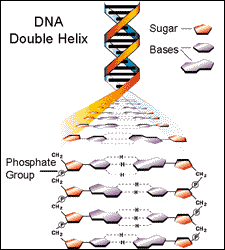
Each strand of DNA double helix is a chain of bases linked to the sugar-phosphate backbone. The two strands are connected with hydrogen bonds. As below:
The phosphate group is linked between the 5th carbon of an upstream sugar and 3rd carbon and a downstream sugar. The 5-carbon sugar is called deoxyribose in DNA and ribose in RNA, which can be distinguished by the loss or presence of an oxygen atom at the 2' carbon, as highlighted in red in the following figure. 

RNA structure is very similar as single-strand DNA, except that
  • The sugar in RNA is a ribose sugar (as opposed to deoxy-ribose) and has an –OH at the 2' C position highlighted in red in the figure below (DNA sugars have –H at that position)
  • Thymine in DNA is replaced by Uracil in RNA. T has a methyl (-CH3) group instead of the H atom shown in red in U.
Reference: http://tigger.uic.edu/classes/phys/phys461/phys450/ANJUM04/

Now let's see the cap structure of RNA:

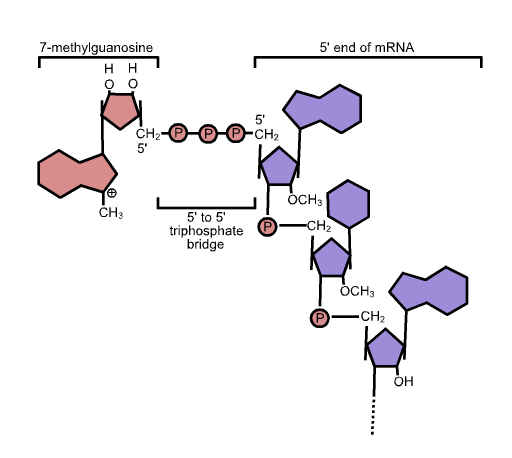
Cap structure are most commonly added to the 5' of RNA, known as mRNA capping. The 5' capping, as the left brown part shown in following figure, is like a guanosine(G) nucleotide but with a methyl group added at the 7' in guanosine. Its 5' is connected to the 5' of RNA with a triphosphate bridge. 

The following figure also contains a 2' cap, which can rarely happen in some eukaryote and viral genome.

Note that mitochondrial mRNAs don't have cap.
Reference: https://en.wikipedia.org/wiki/Five-prime_cap

Friday, September 11, 2015

PLINK2 vs. SNAP for linkage disequilibrium (LD) calculation

Among other ways to calculate SNPs in linkage disequilibrium (LD), two methods have been used in many literatures: PLINK2 and SNAP

With PLINK2, SNPs in LD can be calculated using parameters like:
PLINK2 -r2 dprime --ld-window-kb 1000 --ld-window 10 --ld-window-r2 0.8
SNAP is a web-based service with pre-calculated data: https://www.broadinstitute.org/mpg/snap. You can set the population, distance limit, r2 threshold.

Note that PLINK2 has one more control: --ld-window

In its manual (https://www.cog-genomics.org/plink2/ld), it says "By default, when a limited window report is requested, every pair of variants with at least (10-1) variants between them, or more than 1000 kilobases apart".

That means PLINK2 limits SNPs with two kinds of radius: both the genomic distance (--ld-window-kb) and the number of SNPs apart (--ld-window), while SNAP only has the distance limit. Both of them have the r2 threshold.

Wednesday, August 05, 2015

Dopamine, L-DOPA, catecholamines, TH, Nuur1 etc.

catecholamines (儿茶酚胺) is the collection name for three neurotransmitters: epinephrine (adrenaline), norepinephrine (noradrenaline) and dopamine.

L-DOPA is its precursor. Its corresponding drug is called levodopa.

L-DOPA is produced from the amino acid L-tyrosine by the enzyme tyrosine hydroxylase (TH).

Tyrosine cannot pass the BBB (blood brain barrier), but L-DOPA can.

L-DOPA can be converted to dopamine, which can be further converted to epinephrine (adrenaline), norepinephrine (noradrenaline).

Dopaminergic neurons can be divided into 11 cell groups according to where they located, using histochemical fluorescence method. It includes A8-A16, Aaq and Telencephalic group. Among that, A9 is where the substantia nigra pars compacta (SNpc) refers.

Number of TH-positive neurons in SN declines with age, while a-synuclein level increases with age. This inverse relationship is also seen in the surviving DA neurons of PD patients.

And it shows that the down-regulation of TH is linked to a reduction of expression of transcription factor called Nurr1 (orphan nuclear receptor, encoded by gene NR4A2).

Nurr1 is shown to regulate a category of nuclear-encoded mitochondrial genes. (http://www.ncbi.nlm.nih.gov/pubmed/23341612)

Thursday, May 07, 2015

A clarity on the Illumina TruSeq Small RNA prep kit manual

In the TruSeq® Small RNALibrary Prep Guide, below the Figure 1, there is a sentence: "The RNA 3' adapter is modified to target microRNAs and other small RNAs that have a 3' hydroxyl group resulting from enzymatic cleavage by Dicer or other RNA processing enzymes." It's right, but could be very misleading if you are not clear of the diverse picture of transcriptome (scroll down for more detail). I want to emphasize that the 3' hydroxyl group (and the 5'-phosphate group) is NOT specific to microRNAs or any small RNAs. And it doesn't necessarily result from enzymatic cleavage by Dicer. Sonic fragmentation can also break the full length mRNA (with 5'-cap and 3'-polyA) into truncated RNA pieces with 5'-phosphate and 3' hydroxyl free ends. I just called Illumina to confirm that the 3' and 5' ligation steps don't guarantee the selection of miRNAs (but rather any RNAs with 5'-phosphate and 3' hydroxyl ends, if more accurately). The last step of gel purification is the key to select (or enrich, if more accurately) miRNAs.


OK. Here is what I learned from my colleagues about the different RNA species in the trancriptome:

There are 4 species in the transcriptome, where the later 3 are intermediates of transcription (or half product of degradation).
  • me7Gppp-------------------------3' (1) 
  •                 p------------- 3' (2) 
  •                 OH-------------3' (3) 
  •        ppp---------------------3' (4) 
Only group(2) will ligate to 5’adaptor. The 3' end can also have different format, at least two:
  • 5' ----------------- AAAAAA (1) 
  • 5' ---------- OH (2) 
Also note there are two enzymes used to repair the 5' ends: CIP and TAP. CIP (Calf Intestinal alkaline phosphatase) can remove the 5’ phosphate group of DNA strand. The TAP (Tobacco acid pyrophosphatase) is to remove the 5' cap structure (or 5'-5' triphosphate linkage) and leave a mono-phosphate at the 5' end. So, applying first CIP and then TAP will convert the above (2) and (4) to (3), then convert (1) to (2). That's one way to do capture the 5' cap structure, same purpose as CAGE (but CAGE use the type IIs restriction enzyme MmeI and type III restriction enzyme EcoP15I)

Thursday, January 09, 2014

Is it an elephant or is it a shark?

I still remember when David first present elephant shark in a group meeting, I stopped him and asked naively: Excuse me, is it an elephant or is it a shark? :)

Of course, it's not an elephant. And now I know it's neither a shark.

Here is the today's Nature paper for the 'living fossil':

It says
"Our functional studies suggest that the lack of genes encoding secreted calcium-binding phosphoproteins in cartilaginous fishes explains the absence of bone in their endoskeleton. Furthermore, the adaptive immune system of cartilaginous fishes is unusual: it lacks the canonical CD4 co-receptor and most transcription factors, cytokines and cytokine receptors related to the CD4 lineage, despite the presence of polymorphic major histocompatibility complex class II molecules. It thus presents a new model for understanding the origin of adaptive immunity."

Here is the taxa from the paper:


And I could just find the one I made in my PhD thesis :)


Wednesday, October 30, 2013

Natural barcode and rRNA genes

Ribosomal RNA (rRNA) is part of ribosome, where proteins are synthesized from mRNAs. Ribosome is composed by two major types of rRNAs (large subunit -LSU and short subunit - SSU) and >50 ribosomal proteins.

Credit: http://en.wikipedia.org/wiki/File:Ribosome_mRNA_translation_en.svg

The ribosome in eukaryotes is called 80S ribosome. S is the unit of sedimentation coefficients defined by Svedberg. Its large subunit is called 60S and small subunit is called 40S. In most eukaryotes the small ribosomal subunit contains 18S rRNA, while the large subunit contains three rRNA species: the 5S, 5.8S and 28S.

In eukaryotes, the rRNAs are generally encoded by many copied of rRNA genes in the genome. Mammalian cells have 2 mitochondrial (12S and 16S) rRNA molecules and 4 types of cytoplasmic rRNA (the 28S, 5.8S, 18S, and 5S subunits). The 28S, 5.8S, and 18S rRNAs are encoded by a single transcription unit (45S) separated by 2 internally transcribed spacers (ITS) and padded by external transcribed sequences (ETS) at both ends. The 45S rDNA organized into 5 clusters (each has 30-40 repeats) on chromosomes 13, 14, 15, 21, and 22. The region between the clusters is called intergenic spacer (IGS). These are transcribed by RNA polymerase I. (source from wikipedia). See below for details.
Credit: Xianjun Dong

One example of 45S rRNA in Genbank: http://www.ncbi.nlm.nih.gov/gene/100861532

What interested me is that the ITS sequence can be used as barcode to identify different species because of its high degree of variation and ease of amplification.

5S occurs in tandem arrays (~200-300 true 5S genes and many dispersed pseudogenes), the largest one on the chromosome 1q41-42. 5S rRNA is transcribed by RNA polymerase III. Here is one 5S rRNA record in Genbank: http://www.ncbi.nlm.nih.gov/gene/100873410

All animal mitochondria genomes contain 37 genes, 2 rRNA, 22 tRNA and 13 mRNA.The 2 rRNA are 12S rRNA and 16S rRNA, which are encoded by gene MTRNR1 and MT-RNR2, respectively. Research have shown that MT-RNR2 is associated with Alzheimer's disease and MTRNR1 is associated with hearing loss.

Due to the high number of copies of rRNA genes, we usually see big porportion of rRNA from the total RNA. That will bias the RNAseq result. So we need to remove the rRNAs from the library before sequencing (e.g. ribominus) and after sequencing (e.g. cufflinks -M option). 

I have an early post on howto get rRNA gene annotation: http://onetipperday.blogspot.com/2012/08/how-to-get-trnarrnamitochondrial-gene.html

Wednesday, July 31, 2013

马齿苋(Purslane)

想写马齿苋已经很久了……

小时候家里没菜的时候妈妈经常从外面田边地角采回来一些叶子小小的野菜,像微缩版的石莲花,吃起来酸唧唧的,味道很特别,名字也很特别,叫马齿苋。英山话叫马齿han。

离开家乡之后就再也没有见过了,更没有吃过。

来美国之后,有一次在校园的farm上,看到有人在卖这种野菜,兴奋不已!

上次妈妈来美国,我们去维京群岛玩,居然在岛上看到无数的马齿苋,迎风生长,很茂盛,我们天天去采,一连吃了好几顿,很过瘾!

昨天在曦曦工作的大楼附近再次发现了这种可爱的野菜,虽然有被碾压的痕迹,但是我们一家,加上Mia,很开心地采了一袋子,终于又吃了一次马齿苋!

以后有了院子,我一定在墙角种一些马齿苋,还有鱼腥草,还有黄花菜!
Credit: http://en.wikipedia.org/wiki/Portulaca_oleracea

读wiki才知道,这种可爱的植物在全世界都有分布,这样我就不怕以后搬到哪里没有这种野菜吃了!
“It reached North America in the pre-Columbian era”,哇,原来它在哥伦布之前就来美洲了,厉害!
原来世界上很多人都在吃,还可以生吃,牛逼!来张salad图:

Purslane contains more omega-3 fatty acids (alpha-linolenic acid in particular) than any other leafy vegetable plant. 哇!哇!哇!好东西啊~ 富含omega-3脂肪酸,那不是我们熟悉的fish oil的主要成分吗?马齿苋中EPA(omega-3脂肪酸三成员之一)含量比高达0.01 mg/g,在绿叶菜中高居榜首!除此之外,还富含各种维生素。很有意思的是,它所含有的两种甜菜生物碱色素,红色的叶茎和黄色的花,是很好的抗氧化剂!

马齿苋的药用自然不必说了,“中医用地上全草入药。味甘酸、性寒、无毒。功效为清热解毒,散血消肿,除湿止痢,利尿润肺,止渴生津。 主治痢疾、痈疮肿毒、臁疮、消渴生津、小便不通、白喉、久咳、蛲虫、男性阴囊湿疹、妇女赤白带下、子宫出血、痔疮出血、乳疮(李時珍,《本草綱目》)”。

在希腊的民间马齿苋用于便秘和泌尿系统炎症的治疗。古罗马的老普林尼认为马齿苋的药效很好,以至于建议大家佩戴马齿苋以驱邪 (《博物志》 20.120)

HDAC6, aggresome and Huntington's disease

I learned this piece of knowledge when I was reviewing the gene description for the update list of Factorbook (factorbook.org).

HDAC6 is a member of histone deacetylase/acuc/apha family. As the other member in the family, HDAC6 possesses histone deacetylase activity and represses transcription. But one other interesting function it has is to act as an adapter that recognizes polyubiquitinated misfolded proteins and target them to the aggresome, facilitating their clearance by autophagy.

Here is what I got from wikipedia page of aggresome:
The failure of polypeptides to adopt their proper structure is a major threat to cell function and viability. Consequently, elaborate systems have evolved to protect cells from the deleterious effects of misfolded proteins. Cells mainly deploy 3 mechanisms to counteract misfolded proteins:

1) up-regulating chaperones to assist protein refolding,
2) proteolytic degradation of the misfolded/damaged proteins involving ubiquitin–proteasome and autophagy–lysosome systems, and
3) formation of detergent-insoluble aggresomes by transporting the misfolded proteins along microtubules to a region near the nucleus.
Here is a figure illustrating the last two mechanisms:

Aggregated proteins are transported to the microtubule-organizing center (MTOC) by retrograde transport on microtubules (+ and - ends indicated) by dynein motor complexes. At the MTOC they are surrounded by a cage of intermediate filaments, such as vimentin (IF). Aggresomes have high concentrations of components of the ubiquitin–proteosome pathway of protein degradation, including HSP chaperonins, ubiquitin, and proteosomes. (Credit: http://www.nature.com/onc/journal/v24/n52/fig_tab/1209040f4.html)

While the mechanisms why these aggregates form (despite the existence of cellular machinery to recognize and degrade misfolded protein) and how they are delivered to cytoplasmic inclusions are not known, aggregation of misfolded protein in cytoplasmic inclusions is common to many age-related neurodegenerative diseases, including Parkinson's disease, Alzheimer's disease, Huntington's disease, and amyotrophic lateral sclerosis. It may be because these neurodegenerative diseases are mostly repeated expansion disease, they form aggregation with the inserted trinucleotide/peptide stretch. 

But why and how HDAC6 functions in the pathway of aggresome formation? What makes it different from other histone deacetylase?

Here is a recent paper might worthy to read:

HDAC6 as a target for neurodegenerative diseases: what makes it different from the other HDACs?
http://www.molecularneurodegeneration.com/content/8/1/7/

Friday, July 26, 2013

smallRNA in neurodegenerative diseases

Basic question: how does the small RNA function in neurodegenerative disease brain?

It's been shown that small RNAs (miRNA, piRNA, circular RNA) present in the brain. Recent researches even show that piRNA and circular RNA also expressed highly in brain tissues.

Rajasethupathy P, Antonov I, Sheridan R, Frey S, Sander C, Tuschl T, Kandel ER.
Cell. 2012 Apr 27;149(3):693-707. doi: 10.1016/j.cell.2012.02.057.


The authors found several piRNA clusters highly expressed in Aplysia CNS, with the biogenesis pattern of piRNA in germline, including 5' U, piwi protein loaded, clustered, nuclear localized, sensitive to serotonin. They found that "the Piwi/piRNA complex facilitates serotonin-dependent methylation of a conserved CpG island in the promoter of CREB2, the major inhibitory constraint of memory in Aplysia, leading to enhanced long-term synaptic facilitation". They speculated that the piwi/piRNA complex methylates the promoter of target gene (CREB2 in this case) by first accessing its nascent transcript. Not sure if this also happened to other neuron-functioning genes, such as HES4 and HTT for HD.

Hansen TB, Jensen TI, Clausen BH, Bramsen JB, Finsen B, Damgaard CK, Kjems J.
Nature. 2013 Mar 21;495(7441):384-8. doi: 10.1038/nature11993. Epub 2013 Feb 27.


Memczak S, Jens M, Elefsinioti A, Torti F, Krueger J, Rybak A, Maier L, Mackowiak SD, Gregersen LH, Munschauer M, Loewer A, Ziebold U, Landthaler M, Kocks C, le Noble F, Rajewsky N.
Nature. 2013 Mar 21;495(7441):333-8. doi: 10.1038/nature11928. Epub 2013 Feb 27.


In these two new studies, the primary circular RNA of interest is an antisense transcript to CDR1 termed CDR1as (CDR1 antisense, used herein) or ciRS-7 (circular RNA sponge for miR-7). This RNA was validated by rigorous bioinformatic and molecular studies. Seventy-four copies of a miR-7 binding site are present in this circular RNA owing to the presence of a tandem repeat in the transcribed sequence of CDR1as. These binding sites are conserved across eutherian (placental) mammals, whereas the intervening sequences generally are not.
(Cite: http://www.nature.com/mt/journal/v21/n6/full/mt2013101a.html)

It's interesting that the circular RNA discovered this year also anti-sense to the target/host gene. Would that be a general mechanism that neurodegenerative disease are controlled by the anti-sense RNA?


Another question: why the repeated peptide/trinucleotide insertion or expansion is a common feature for most neurodegenerative disease?

Here is the table for the at least 20 inherit neuro-diseases and the associated repeat insertion:

DiseaseMain clinical featuresCausal repeat (gene)Repeat locationMechanism or categoryComments
DM1Muscle weakness, myotonia, cardiac-endocrine-GI disease, MRCTG (DM1, also known as DMPK)3′ UTRRNA GOFA very common form of muscular dystrophy
DM2Muscle weakness, myotonia, cardiac-endocrine-GI diseaseCTG (ZNF9, also known as CNBP)IntronRNA GOFA striking phenocopy of DM1
DRPLASeizures, choreoathetosis, ataxia, cognitive declineCAG (ATN1)Coding regionPolyglutamine GOFVery rare, most patients are in Japan
FMR1MR, facial dysmorphism, autismCGG (FMR1)5′ UTRHypermethylation of promoter, LOFMost common inherited MR
FMR2MR, hyperactivityGCC (FMR2)5′ UTRLOFNeeds to be ruled out in X-linked MR
FRDAAtaxia, sensory loss, weakness, diabetes mellitus, cardiomyopathyGAA (FXN)IntronLOF, phenocopy of mitochondrial diseaseMost common inherited ataxia in Caucasian ethnicity
FXTASAtaxia, intention tremor, parkinsonismCGG (FMR1)5′ UTRRNA GOFPremutation carriers only
HDChorea, dystonia, cognitive decline, psychiatric diseaseCAG (HTT)Coding regionPolyglutamine GOFOne of the most common inherited diseases in humans
HDL2Chorea, dystonia, cognitive declineCTG (JPH3)3′ UTR, coding regionRNA GOF, poly-amino acid GOF and/or LOF?A striking phenocopy of HD
Myoclonic epilepsy of Unverricht and LundborgPhotosensitive myoclonus, tonic–clonic seizures, cerebellar degenerationCCCCGCCCCGCG (CSTB)PromoterLOFRare autosomal recessive disorder found in Finland and N. Africa
OPMDEyelid weakness, dysphagia, proximal limb weaknessGCG (PABPN1)Coding regionPolyalanine GOFModest expansion causes disease
SBMAProximal limb weakness, lower motor neuron diseaseCAG (AR)Coding regionPolyglutamine GOFPhenotype includes LOF androgen insensitivity
SCA1Ataxia, dysarthria, spasticity, ophthalmoplegiaCAG (ATXN1)Coding regionPolyglutamine GOFAccounts for 6% of all dominant ataxia
SCA2Ataxia, slow eye movement, hyporeflexia, motor disease, occasional parkinsonismCAG (ATXN2)Coding regionPolyglutamine GOFATXN2 protein may not reside in the nucleus
SCA3Ataxia, dystonia, lower motor neuron diseaseCAG (ATXN3)Coding regionPolyglutamine GOFMost common dominant ataxia
SCA6Ataxia, dysarthria, sensory loss, occasionally episodicCAG (CACNA1A)Coding regionPolyglutamine GOFCausal gene encodes a subunit of a P/Q-type Ca2+ channel
SCA7Ataxia, dysarthria, cone-rod dystrophy retinal diseaseCAG (ATXN7)Coding regionPolyglutamine GOFClinically distinct as patients have retinal disease
SCA8Ataxia, dysarthria, nystagmus, spasticityCTG/CAG (ATXN8)Untranslated RNA, coding regionRNA GOF and polyglutamine GOFMany cases of reduced penetrance
SCA10Ataxia, dysarthria, seizures, dysphagiaATTCT (ATXN10)IntronRNA GOF?Huge repeats; only Mexican ancestry?
SCA12Tremor, ataxia, spasticity, dementiaCAG (PPP2R2B)Promoter, 5′ UTR?UnknownCausal gene encodes a phosphatase
SCA17Ataxia, dementia, chorea, seizures, dystoniaCAG (TBP)Coding regionPolyglutamine GOFCausal gene encodes a common transcription factor (TBP)
Syndromic/non-syndromic X-linked mental retardationMR alone, with seizures or with dysarthria and dystoniaGCG (ARX)Coding regionProbably LOFAssociated with West syndrome or Partington syndrome
AR, androgen receptor; ARX, aristaless-related homeobox; ATN1, atrophin 1; ATXN, ataxin; CACNA1A, voltage-dependent P/Q-type calcium channel subunit α-1A; CSTB, cystatin B; DM, myotonic dystrophy; DMPK, DRPLA, dentatorubral-pallidoluysian atrophy; FMR1, fragile X mental retardation syndrome; FMR2, fragile X E mental retardation; FRDA, Friedreich's ataxia; FXN, frataxin; FXTAS, fragile X tremor ataxia syndrome; GI, gastrointestinal; GOF, gain of function; HD, Huntington's disease; HDL2, Huntington's disease-like 2; HTT, huntingtin; JPH3, junctophilin 3; LOF, loss of function; MR, mental retardation; OPMD, oculopharyngeal muscular dystrophy; PABPN1, poly(A)-binding protein, nuclear 1; PPP2R2B, protein phosphatase 2 regulatory subunit B, β isoform; SBMA, spinal and bulbar muscular atrophy; SCA, spinocerebellar ataxia; TBP, TATA box-binding protein; ZNF9, zinc finger 9.
Ref: http://www.nature.com/nrg/journal/v11/n4/fig_tab/nrg2748_T1.html

Not only genes in the list, other genes like the CDR1 (Cerebellar Degeneration-Related) gene mentioned above also contains several hexapeptide repeats.

 CDS             387..1175
                     /gene="CDR1"
                     /gene_synonym="CDR; CDR34; CDR62A"
                     /note="Derived by automated computational analysis using
                     gene prediction method: BestRefseq."
                     /codon_start=1
                     /product="cerebellar degeneration-related antigen 1"
                     /protein_id="NP_004056.2"
                     /db_xref="GI:44889483"
                     /db_xref="CCDS:CCDS14670.1"
                     /db_xref="GeneID:1038"
                     /db_xref="HGNC:1798"
                     /db_xref="HPRD:02361"
                     /db_xref="MIM:302650"
                     /translation="MAWLEDVDFLEDVPLLEDIPLLEDVPLLEDVPLLEDTSRLEDIN
                     LMEDMALLEDVDLLEDTDFLEDLDFSEAMDLREDKDFLEDMDSLEDMALLEDVDLLED
                     TDFLEDPDFLEAIDLREDKDFLEDMDSLEDLEAIGRCGFSGRHGFFGRRRFSGRPKLS
                     GRLGLLGRRGFSGRLGGYWKTWIFWKTWIFWKTWIFRKTYIGWKTWIFSGRCGLTGRP
                     GFGGRRRFFWKTLTDWKTWISFWKTLIDWKTWISFWKTLIDWKI"